
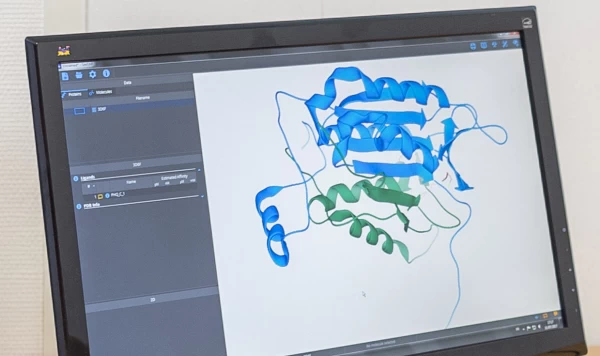
What is Virtual Screening?
Virtual screening is a key computational technique routinely used in drug discovery to identify potential drug candidates by evaluating large libraries of chemical compounds in silico before experimental testing. By applying advanced computational techniques, including structure-based docking, pharmacophore mapping, ligand-based similarity searches, and AI-driven predictive models, virtual screening enables medicinal chemists and drug discovery scientists to identify and prioritize compounds that are most likely to exhibit the desired biological activity against a given target. This approach is cost–effective and faster than high-throughput screening (HTS), and the advent of AlphaFold has further expanded its potential applications. However, virtual screening still suffers from the poor accuracy of scoring functions which leads to the generation of false positives/negatives results.
How can virtual screening be used to deliver better leads, faster?
Pairing virtual screening with Edelris AS-MS screening technology has been a key asset in the success of our EDEN (Edelris Discovery ENgine) platform:
- AS-MS profiling provides a rapid experimental confirmation of the affinity of virtual hits for the target.
- Virtual screening is used to investigate plausible binding modes of the HTS AS-MS hits and foster hit-to-lead optimizations.
To boost the power of its platform, Edelris has compiled a 50-million-library from its 3D-rich, Natural Product-inspired proprietary Keymical SpaceTM. This virtual collection is rule-of-5 (Ro5) compliant, enriched with attractive pharmacophores and original decorations, and features an unmatched diversity and novelty. Our team of experienced medicinal chemists stay tightly connected to the process, ensuring hits can be rapidly synthesized, validated, and optimized, accelerating the Design-Make-Test-Analyse (DMTA) cycle and delivering better lead compounds faster.
A case study: Discovery of Novel hPIF1 Helicase Inhibitors
Researchers at Edelris collaborated with partners at the University of Sheffield and the University of Grenoble Alpes to demonstrate the power of this approach. In their work, published in “Bioorganic & Medicinal Chemistry Letters”, the teams detailed how they identified active inhibitors of human PIF1 helicase (hPIF1). The hPIF1 DNA helicase is implicated in mediating genome stability, with strong evidence linking increased hPIF1 expression to poor cancer patient outcomes.
A virtual structure-based screening of hPIF1 was carried out into a recently identified allosteric pocket on the hPIF1 catalytic domain (PDB ID: 9FB8). After rigorous computational filtering, 96 compounds were prioritized for in vitro screening, leading to the discovery of a novel chemical series that was further validated through a hit-exploration program. Hit 48 demonstrated activity in an hPIF1-unwinding assay, with an IC₅₀ of 320 μM. These findings open up new avenues for the development of hPIF1 inhibitors and illustrate the strength of Edelris’ in silico and wet lab medicinal chemistry expertise: Starting with structure-based docking, utilizing compounds with synthetic feasibility, and accelerating into hit validation and expansion with internal chemistry support.
Conclusions
In the hands of skilled discovery teams, virtual screening serves as a bridge between computational innovation and practical medicinal chemistry, helping projects advance from novel concepts to tangible leads more quickly and cost–effectively. It is actively utilized for fragment–based drug discovery (FBLD) and lead optimization by expanding the chemical space available for investigating structure–activity relationship (SAR). While challenges remain, AI presents new opportunities to overcome these obstacles and tackle more complex targets and emerging paradigms, such as proximity-induced degradation.
At Edelris, we combine Natural Product-inspired chemistry with the latest computational methods to help our partners achieve more robust biological insights through smarter chemistry. We leverage virtual screening, our medicinal chemistry expertise, and HTS technology to enable faster identification of novel, 3D–rich, pharmacophore-enriched compounds, backed by tangible synthetic feasibility, accelerating your path to novel therapeutics.